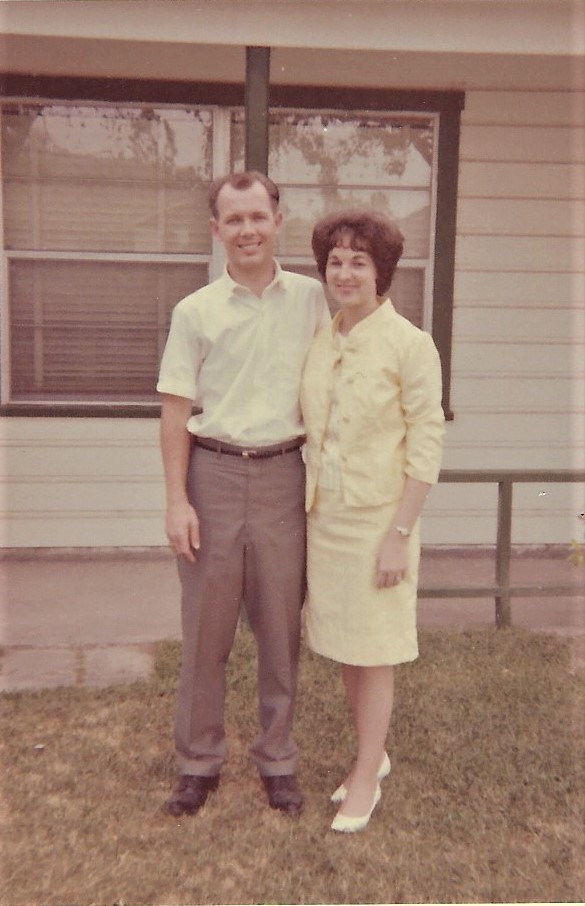
A few days ago, as I was checking out at HEB, I noticed most of what I was buying was frozen TV dinners. The employee and I were having polite conversations when I asked if she could guess my diet. I told her that TV dinners are mostly what I eat now that my wife is gone. She asked if she was out of town for the holidays. I said no, she passed away. She responded with, “I’m sorry.” I said, “It’s ok, it was three years ago, and I’m used to it now.”
As I was driving home, I thought about what I had told her and if it was true. For the next few days, I thought about close friends and relatives who passed away this year. There have been several old classmates from high school who passed away recently, and that causes you to think about being a “survivor”. When you manage to reach your 80s, you realize that many of those in your “circle” will no longer be there to talk to.
Alzheimer’s and dementia in general are in the news a lot these days because that is the “new cancer” or medical diagnosis where billions of dollars will be pumped into finding that “cure” they have been chasing for thirty years. I have a lot I could say about this effort, but that is not the purpose of this article. I am going to try not to make this a book with all my thoughts and keep my focus narrower. For the vast majority of those diagnosed with dementia of any form are at least sixty years old, but usually older than that. Most of my life, that was just called “old age”.
Alzheimer’s is the choice for making movies, because they can present the typical personality changes of going in and out of recognizing family members. Huge sums of money going into medical research grants drive the advent of new forms of dementia diagnosis categories. A concussion is one of the most common traumatic brain injuries that usually happens after an impact to the head, either a blow or bumps, or violently shaking the head. A concussion usually affects brain function and has effects that may include temporary headaches, temporary inability to concentrate, problems with memory, balance, and coordination. The brain comprises small tissues and is protected by the skull; although the skull shields it, the brain can still be affected when there is a violent impact on the head.
Treatments like chemotherapy for cancer can lead to periods of “brain fog” that can make a person more susceptible to falls. Falls that involve injury to the head can cause a concussion, and not all concussions can be diagnosed by a few questions or even more extensive exams. Radiation therapy, chemotherapy, and even vaccinations are forms of poisons designed to get the immune system to destroy certain cells in the body. The treatments and follow-up exams are focused on looking at the area of the body being treated; however, there has never been any research to link dementia to previous medical treatments.
With Eva, after one of her serious falls, a neurologist examined her, had some tests conducted, and gave her a diagnosis of Parkinson’s. He put her on some new medications and changed other medications. Her falls got worse, and she was admitted to a different hospital with many additional tests over several days. Another neurologist was brought in and determined that she did not have Parkinson’s, and he changed her medications again. She had many more falls, and in 2016, a fall caused a break in her upper part of her spine that goes up to the lower part of her brain. She had many series of CT scans, MRIs, and X-rays over the next five months while wearing a neck brace before having the surgery to insert a screw to reattach the top part that did not heal on its own. Over the next three months, wearing the neck brace, she had more CT scans and MRIs to determine if there were any changes before being allowed to stop wearing the neck brace and being released.
When Eva passed away in April 2022, she had never lost her memory, and she still knew family and friends. She was never unpleasant or difficult to be around, but her body was shutting down, limiting what she could do. It became difficult for her to eat or even desire to eat. It was difficult for her to talk or be involved in discussions. At one point, not long before she left us, I had a question about which book in the “Left Behind” books an event occurred. I showed her four of the books, and she pointed to the correct book and then opened it to the chapter.
She was still there, but it was hard to remember that when they cannot function the way we are accustomed to. I cannot know what it was like for Eva during the last few months, even though I was with her every day. I knew her better than any other person, but I do not know if she looked forward to each new day. I do know that I wish I had treated each day like it would be the last day we would have together.
As I mentioned earlier, reaching a point in life where your circle of older family and friends is only in your memories, and you still have some mobility, can make loneliness a part of your daily life. I have two daughters, and they have their families. I get together about once a week with Jennifer’s family for a meal or other occasion, and less frequently with Tammy’s family due to where they live. My sister, JoAnn, and I talk often, but we don’t get together as much these days.
Back to my statement, “I’m used to it now”, I am over the shock and grief part, but I spend a lot of hours thinking about those early years we shared. When we were living in the moment and had no thought about the retirement years. A time when we had short-term goals and celebrated achieving them. The excitement of a new job, house, or baby. The feeling of love shared during those unexpected problems you got through together.
It is not unusual for an older person to sometimes have to think about the word they want to say or to have some difficulty remembering the names of people they have not seen in years. It might take you a little longer to walk or do something, because the chance of falling is always greater than when you were younger. It is not the falling part that is the problem; it is the landing and healing parts that you worry about the most.
As a Christian, I do not worry about dying; in fact, I look forward to that day. What I don’t want is an extended period when I might be dependent on others each day. Living out those last days, months, or years with cognitive abilities is a good thing that we all hope for. However, I can walk outside and see things that the yard guys did wrong, but I know I am not going to be able to do it myself like I used to. I know that I can find a new company, but I might have a similar problem again. The older you get, the more time you worry about the things you are not doing any longer.
Charley Pride – We Could
Discover more from RICHRAY BLOG
Subscribe to get the latest posts sent to your email.